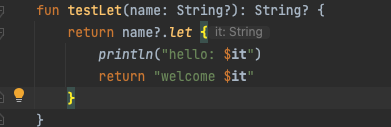
- let 闭包中上下文仍然是对象本身,可以重新定义变量名称,也可以直接使用it;let闭包如果需要返回值,则需要显式使用 return。
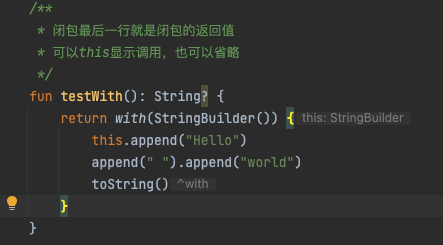
- with 闭包中上下文也是这个对象,只不过默认是this,不用显式调用this,直接可以调用对象的方法,最后一行就是with闭包的返回值,不用显式使用 return。
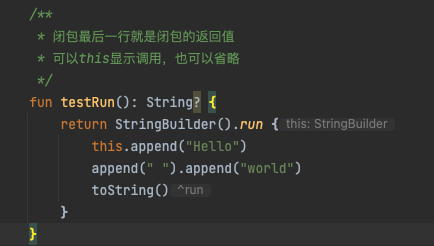
- run 跟with十分类似,唯一不同就是在对象上调用,更符合使用习惯。
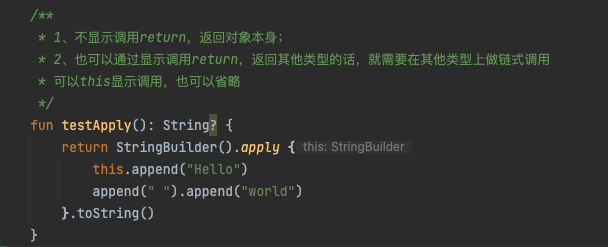
- apply 适合链式调用,默认返回对象本身,不用显式调用 return 返回对象本身,如果希望用另个对象进行后续的链式调用,则需要显式调用 return。
class LetScope {

    /**
     * 有返回值let
     */
    fun testLet(name: String?): String? {
        return name?.let {
            println("hello: $it")
            return "welcome $it"
        }
    }

    /**
     * 无返回值let
     */
    fun testLet1(name: String?): String? {
        name?.let {
            println("hello: $it")
        }
        return null
    }

    /**
     * 自定义let参数
     */
    fun testLet2(name: String?): String? {
        name?.let { renameParam ->
            println("hello: $renameParam")
        }
        return null
    }
}

fun main() {
    val scope = LetScope()
    var result: String? = null

    /**
     * 测试有返回值let
     */
    result = scope.testLet("jack")
    println(result)

    /**
     * 测试无返回值let
     */
    result = scope.testLet1("jack")
    println(result)

    /**
     * 测试自定义参数(避免let嵌套,导致多个it混乱)
     */
    result = scope.testLet2("jack")
    println(result)
}
class WithScope {

    /**
     * 闭包最后一行就是闭包的返回值
     * 可以this显式调用,也可以省略
     */
    fun testWith(): String? {
        return with(StringBuilder()) {
            this.append("Hello")
            append(" ").append("world")
            toString()
        }
    }
}

fun main() {
    val scope = WithScope()
    var result: String? = null

    /**
     * 测试with
     */
    result = scope.testWith()
    println(result)
}
class RunScope {

    /**
     * 闭包最后一行就是闭包的返回值
     * 可以this显式调用,也可以省略
     */
    fun testRun(): String? {
        return StringBuilder().run {
            this.append("Hello")
            append(" ").append("world")
            toString()
        }
    }
}

fun main() {
    val scope = RunScope()
    var result: String? = null

    /**
     * 测试 run
     */
    result = scope.testRun()
    println(result)
}
class ApplyScope {

    /**
     * 1、不显示调用return,返回对象本身;
     * 2、也可以通过显示调用return,返回其他类型的话,就需要在其他类型上做链式调用
     * 可以this显式调用,也可以省略
     */
    fun testApply(): String? {
        return StringBuilder().apply {
            this.append("Hello")
            append(" ").append("world")
        }.toString()
    }
}

fun main() {
    val scope = ApplyScope()
    var result: String? = null

    /**
     * 测试 apply
     */
    result = scope.testApply()
    println(result)
}